Working Sessions - DOCanarias
Working Sessions
- Home >
- Working Sessions
DOCanarias
Working Sessions
We bring together creators, institutions, funds, training spaces and cultural workers from Africa, Latin Ameri- ca, the Caribbean and the Canary Islands to collectively reflect on the challenges and opportunities of contem- porary Afro-Indigenous filmmaking. Over the course of four dialogue sessions, this encounter offers an exercise in listening, exchange, and radical imagination around cultural policies, funding models, project support and mentoring processes, and artistic practices that contri- bute to building transatlantic cooperation networks and help imagine other possible worlds through cinema.
Institutions Roundtable


ZURI FERMÍN
Coordinator for the co-development of training projects and programmes at IBERMEDIA
From Venezuela, she has been living in Spain for over 15 years. After completing her university studies in the United States, she returned to Venezuela and worked on international cooperation programmes at various public and private institutions in the country. Zuri joined the IBERMEDIA Programme when it was first established in 1998. Currently, she coordinates the co-development initiatives and training programmes within the programme’s Technical Unit, based in Madrid.
Ibermedia
Ibermedia is a programme designed to encourage the co-production and co-development of feature films, drama series, documentaries and animated films produced within our community of twenty-one countries: Argentina, Bolivia, Brazil, Colombia, Costa Rica, Cuba, Chile, Ecuador, El Salvador, Spain, Guatemala, Honduras, Mexico, Panama, Paraguay, Peru, Portugal, Puerto Rico, the Dominican Republic, Uruguay and Venezuela.
Our mission is to work towards the creation of an Ibero-American audiovisual space through financial support and calls for proposals that are open to all independent film producers from member countries in Latin America, Spain and Portugal.
ZURI FERMÍN
Coordinator for the co-development of training projects and programmes at IBERMEDIA
From Venezuela, she has been living in Spain for over 15 years. After completing her university studies in the United States, she returned to Venezuela and worked on international cooperation programmes at various public and private institutions in the country. Zuri joined the IBERMEDIA Programme when it was first established in 1998. Currently, she coordinates the co-development initiatives and training programmes within the programme’s Technical Unit, based in Madrid.
Ibermedia
Ibermedia is a programme designed to encourage the co-production and co-development of feature films, drama series, documentaries and animated films produced within our community of twenty-one countries: Argentina, Bolivia, Brazil, Colombia, Costa Rica, Cuba, Chile, Ecuador, El Salvador, Spain, Guatemala, Honduras, Mexico, Panama, Paraguay, Peru, Portugal, Puerto Rico, the Dominican Republic, Uruguay and Venezuela.
Our mission is to work towards the creation of an Ibero-American audiovisual space through financial support and calls for proposals that are open to all independent film producers from member countries in Latin America, Spain and Portugal.


Ana Sylvestre
Audiovisual Secretariat of the Brazilian Ministry of Culture
Ana Paula Melo Sylvestre holds a PhD in Public Policy from the National School of Public Administration in Brazil and a Master’s degree in Linguistics from the University of Brasília. Federal civil servant at the Brazilian Ministry of Culture since 2010, she currently serves as General Coordinator for Training, Innovation and Audiovisual Coordination within the Directorate for Training and Innovation at the Ministry of Culture’s Audiovisual Secretariat. She conducts research into the formulation and implementation of public cultural policies, with an emphasis on promoting equity in the audiovisual sector. In 2025 she defended her doctoral thesis, ‘Policy Design, Equity and Cinema: Instruments and Intersectionality in Affirmative Action Policy for the Audiovisual Sector in Brazil’.
SECRETARIA DO AUDIOVISUAL DO MINISTÉRIO DA CULTURA DO BRASIL
The Audiovisual Secretariat (SAv) is a body of the federal public administration directly under the Brazilian Ministry of Culture (MinC), responsible for the formulation, coordination and implementation of federal public policies for the audiovisual sector. Its remit includes strategic planning for the sector’s development, promoting training and professional qualifications, fostering innovation, preserving audiovisual heritage, strengthening independent audiovisual production, expanding access to Brazilian audiovisual content, and monitoring the sector’s main public funding mechanisms. Furthermore, the Secretariat promotes diversity, inclusion and sustainability in the Brazilian audiovisual sector through collaboration with sub-national governments, cultural institutions and sector stakeholders.


Noé Pineda Arredondo
Coordinator for the co-development of training projects and programmes at IBERMEDIA
Noé Pineda Arredondo (Mexico City) has worked on a large number of audiovisual projects in collaboration with various production companies as a photographer, including Marca Diablo, TV UNAM, Clío, Detective, ProMedios, and the History Channel, among many others, from 1997 to 2025. He has collaborated on various documentary productions using archival footage and as a local producer from 1997 to the present.
Since 2018, he has been the founding director of the Cinetiqueta project, which brings cinema to neighborhoods, offers production workshops, and organizes film screenings for children in neighborhoods throughout San Cristóbal de Las Casas, Chiapas.
Since 2019, he has collaborated with IMCINE, and since 2023, he has served as Coordinator of the Program to Promote Audiovisual Creation in Mexico and Central America for Indigenous and Afro-descendant Communities (ECAMC).
IMCINE
IMCINE stands for the Instituto Mexicano de Cinematografía (Mexican Film Institute). It is the Mexican federal government’s agency dedicated to supporting, developing, and promoting national film production and the domestic audiovisual industry.
Established on March 25, 1983, and operating under the auspices of the Secretariat of Culture, IMCINE acts as the primary financial and cultural engine for Mexican cinema


NATACHA MORA YANES
Director of the Audiovisual Department, Government of the Canary Islands - Canary Islands Film
A graduate in Economic and Business Sciences with a Master’s in Cultural Management from the Universitat Oberta de Catalunya, Mora Yanes worked as a cultural manager at various public institutions in the Canary Islands and has headed the Audiovisual Department of the Canarian Government since 2013.
She has led Canary Islands Film since its inception in 2015. The initiative coordinates all activity related to bringing audiovisual productions to the islands and internationalising, developing and consolidating the islands’ audiovisual industry.
CANARY ISLANDS FILM
CANARY ISLANDS FILM is the department of the Government of the Canary Islands where you can find all the information on tax advantages, filming locations and everything you need for your audiovisual production. With tax incentives of up to 50%, compatible with a 4% corporate tax rate, the Canary Islands have become a leading filming destination for national and international productions. This department will put you in touch with the various Film Commissions across the islands and the regional sector, as well as offer guidance on any issue related to your shoot.


Pablo Martín Carbajal
Pablo Martín Carbajal has 30 years’ experience in international relations, foreign trade and investment promotion. He has served as director of the foreign trade department at the Santa Cruz de Tenerife Chamber of Commerce; held the post of Director-General for Relations with Africa at the Canary Islands Government for 12 years; and has served for two separate terms as Chief Executive of Proexca, the Canary Islands Government’s public foreign trade promotion agency, a position he currently occupies. He holds a degree in Economics and has undertaken training in e-business, development cooperation, foreign trade and investment promotion. He speaks English and French and has lived in France, Belgium, Armenia and Georgia. He has developed a career as a writer, having published, amongst other works, two novels set in Africa.
PROEXCA
PROEXCA is the public agency of the Canary Islands Government designed to promote the internationalization of local companies and attract strategic foreign investment. It supports the archipelago’s bio-economy by aiding startups, fostering clusters, and highlighting the region’s specific tax, climate, and logistical advantages


Ángeles Jurado
A graduate in Information Sciences (Journalism) from the Universidad Complutense de Madrid, Jurado specialised in online journalism at Stockholm University and received a Master’s degree in Humanitarian Assistance from University College Dublin. She has been a member of the Casa África communications team since 2007, and has led the area of Culture and Education since October 2025.
Jurado has collaborated with outlets such as Planeta Futuro, Altair, La Vanguardia, Ara, Mundo Negro and El Orden Mundial. She has also coordinated and edited the publications Si hablas de nosotros... and Doce relatos urbanos, and translated and written introductions to works by African authors. She is the coauthor of the essay La Françafrique vista desde el sur and the author of Catálogo de autoras africanas publicadas en España. In 2024, she was the recipient of the VII Premio de Literaturas y Letras Africanas from the Fundación Pájaro Azul and the Universidad de Oviedo. She is currently working towards a doctorate in history at the Universidad de Las Palmas de Gran Canaria, focusing on the contribution of women in West Africa to world history and feminism. Alongside this, she writes fiction writing and coordinates the Casa África book club.
Casa África
Casa África works to bring Africa and Spain closer together, fostering mutual understanding and strengthening relations with African countries within the framework of Spain’s public diplomacy. To this end, it organises over 200 activities every year, covering economic, social, cultural, institutional and political issues. It promotes collaborative networks and projects of common interest between the two regions. Its work seeks to generate knowledge and encourage dialogue between civil societies and contribute to the development of lasting relationships based on cooperation and exchange. Additionally, it organises and supports meetings, forums and programmes that favour greater understanding of African realities in Spain, paying particular attention to the continent’s current affairs and the participation of African professionals, creators, and representatives.
Funds and Distribution Roundtable


Mélanie de Vocht
Mélanie de Vocht finished her MA in Cultural Anthropology in 2005. After graduation, she started working for the Program Department of the International Documentary Film Festival Amsterdam (IDFA). From 2006 until now she’s been working for the IDFA Bertha Fund. As manager of the Fund Mélanie oversees the development and implementation of the different support programs and the mentoring of the supported projects. She is part of the selection committee, guides the selected projects and takes care of the IDFA Bertha Fund selection and delegation at IDFA each year. Furthermore, she represented the fund and/or was part of the jury in several documentary film festivals in the IBF focus countries.
IDFA Bertha Fund
In 28 years the IDFA Bertha Fund has developed into an internationally renowned institution
with a broad network supporting over 900 documentaries projects and film organisations in
Africa, Asia, Eastern Europe, Latin America and the Caribbean and Oceania.


Vanessa Cuervo Forero
Cultural worker, dancer, impact strategist, and field builder based in Bogotá, Colombia. Vanessa connects storytelling and activism to spark social change towards more just and diverse societies. She has designed campaigns, created programs, and developed strategies in collaboration with documentaries, podcasts, and social organizations. Her creative strategies reach the right audiences and collaborators and invite them to be part of the change we want to see.
As Director of Latin American Programmes at Doc Society, she designs and leads labs, programs, and collaborations across Latin America, building strong alliances with cultural organizations in Colombia, Mexico, Ecuador, and Brazil, while supporting documentary filmmakers and podcasters throughout the region.
DOCSOCIETY
Doc Society is a global nonprofit organization founded in the United Kingdom in 2005. It supports independent documentary filmmakers, advocates for the right to free expression, and connects socially impactful films with new audiences and funding sources.


Don Edkins
Don Edkins is a South African documentary filmmaker and producer based in Cape Town.
He has produced documentary film anthologies that have been broadcast around the world,
such as Steps for the Future (2001), Why Democracy? (2007), Why Poverty? (2012), and
Generation Africa (2022), earning multiple international awards. He is currently producing
Generation Africa 2.0, a documentary film project for African filmmakers from 21 countries
on climate change and environmental justice. He is Executive Producer of AfriDocs, a free-
to-view VOD platform across Africa that screens the best African documentary films.
STEPS
STEPS (Social Transformation & Empowerment Projects) is an African non-profit company based in Cape Town, South Africa. Founded in 2001 we have developed a unique methodology using documentary film to address social justice issues.
STEPS has worked extensively across Africa, as well as Asia and Latin America, and the rest of the world. Through a process of story development, training of filmmakers, producing and distributing high quality documentary films, and training of organisations to use film to address their focus areas of intervention, we have developed platforms to reach people at all levels with engaging media. Audience development is at the core of the STEPS distribution initiatives. This includes a network partnership of nine mobile cinema organisations across Southern and Eastern Africa, as well as the streaming platform AfriDocs.


Loira Limbal
Loira Limbal is President & CEO of Firelight Media, a nonprofit organization that supports, resources, and advocates on behalf of documentary filmmakers of color. She is a multidisciplinary artist who works in documentary film and video installation and as a DJ. Her films include Through the Night (2020) (Tribeca Film Festival, du-Pont Columbia Award, and NYT Critic’s Pick), which aired on PBS’ POV Series, and Estilo Hip Hop (2009), which aired on PBS. Her recent accolades include a Guggenheim Fellowship, a Creative Capital Award, a USA Fellowship, a NAACP Image Award nomination, and a Sundance Institute Fellowship.
Firelight Media
Firelight Media is a nonprofit organization that supports, resources, and advocates on behalf of documentary filmmakers of color. Firelight Media’s artist programs include the Documentary Lab, a 12-month fellowship for underrepresented filmmakers; the Firelight Fund, which provides unrestricted funding to documentary projects by and about communities disproportionately impacted by today’s political and social crises; and the William Greaves Research & Development Fund for mid-career filmmakers. Firelight Media also produces digital short films, including HOMEGROWN: Horizons, for PBS Digital Studios, and season 4 of In the Making, with PBS’ American Masters.


Jairo López
Jairo López (Barlovento, La Palma, 1980) has been a producer with El Viaje Films since 2022. Previously, he managed the Clúster Audiovisual de Canarias, co-founded Digital 104 and was the president of both Microclima and the Aula de Cine de la Universidad de La Laguna. He combines his professional work with teaching at the Instituto del Cine de Canarias and the Escuela de Cine Fuera de Campo. He has participated in industry markets such as those in Cannes, San Sebastián and Málaga. As distribution manager, he has coordinated the campaigns of feature films such as La lucha, Sugar Island, La hojarasca and La viajante, along with festival and marketing strategies. He is also a documentary director, a researcher and the author of numerous publications on Canarian cinema and audiovisual media.
MAREA ALTA FILMS
Marea Alta es una joven distribuidora que apuesta por películas personales, emocionantes e innovadoras. Nuestra meta es que algunas de las películas que más nos entusiasman del circuito de festivales puedan llegar también a los espectadores de las salas de cine de España.
After La Hojarasca (2024), premiered at the Berlinale and was awarded in Málaga, came Sugar Island, which premiered at Venice. Since then, it has screened at BFI London, Thessaloniki, Stockholm and São Paulo.
Training and Labs Roundtable


Julia Duarte
With a degree in Portuguese Studies from Universidade Nova de Lisboa, Julia Duarte has been working with cinema since 2006, when she joined the São Paulo International Film Festival in Brazil, where she covered several positions, including programming, until 2017. Julia is now based in Lisbon, and is a founder-partner of Spamflix, a distribution and production company, and has consulted on the international careers of Brazilian films and participated in public selection committees for projects.
She was executive manager of Cinema do Brasil, and between 2017 and 2023, she was coordinator of the Brazilian edition of the São Paulo Locarno Industry Academy, created by the Locarno Film Festival.
She currently works in the Open Doors section of the same festival, as part of the artistic team, selection committee, and matchmaker, since 2022.
Locarno Open Doors
Starting from 2003, Open Doors has been championing filmmaking from regions where independent cinema is especially challenging, building bridges for collaboration across regions, countries and continents. Through Open Doors’ public and professional programs, we aim to provide a space where talents find support in every step of their creative and professional journey and where discussion and reinvention of today’s cinema can happen among free voices. The ultimate goal of Open Doors is to contribute to the development of a more collaborative worldwide film community without borders, while making the independent scene stronger and more sustainable. From 2025-2028 Open Doors is focused on 42 countries of the African Continent.
ZURI FERMÍN
Coordinator for the co-development of training projects and programmes at IBERMEDIA
From Venezuela, she has been living in Spain for over 15 years. After completing her university studies in the United States, she returned to Venezuela and worked on international cooperation programmes at various public and private institutions in the country. Zuri joined the IBERMEDIA Programme when it was first established in 1998. Currently, she coordinates the co-development initiatives and training programmes within the programme’s Technical Unit, based in Madrid.
Ibermedia
Ibermedia is a programme designed to encourage the co-production and co-development of feature films, drama series, documentaries and animated films produced within our community of twenty-one countries: Argentina, Bolivia, Brazil, Colombia, Costa Rica, Cuba, Chile, Ecuador, El Salvador, Spain, Guatemala, Honduras, Mexico, Panama, Paraguay, Peru, Portugal, Puerto Rico, the Dominican Republic, Uruguay and Venezuela.
Our mission is to work towards the creation of an Ibero-American audiovisual space through financial support and calls for proposals that are open to all independent film producers from member countries in Latin America, Spain and Portugal.


Hicham Falah
Hicham Falah is a cinematographer, screenwriter and director, producer and programmer. Since 2008, he has been the Artistic Director of the International Women’s Film Festival of Salé (Morocco) and, since 2012, General Director of the Agadir International Documentary Film Festival (FIDADOC) (Morocco) and its training and artistic support programmes for emerging Moroccan and African filmmakers, including the FIDADOC’s Ruche Documentaire, its Pan-African Writing Residency and the Produire au Sud Agadir workshop. In 2018, he conceived and launched “Sisters in Film”, an empowerment programme for women filmmakers from the MENA region. Since 2019, he has been responsible for the artistic coordination of SENTOO, a Pan-African programme supporting filmmaking and South-South co-productions, initiated and led by the film centres of several countries in North and West Africa.
The FIDADOC “Ruche Documentaire”
The FIDADOC’s “Ruche Documentaire” is both a space for meeting and exchange and a training, artistic support and professional development programme comprising several components. Since 2012, FIDADOC’s educational and professional guidance activities have been brought together under the “Ruche Documentaire”, dedicated to discovering the next generation of Moroccan and African documentary filmmakers, strengthening their skills, and supporting them in the development and realisation of their projects.


Johanné Gómez Terrero
Johanné Gómez Terrero is a director and a graduate of the International Film and Television School in San Antonio de los Baños, Cuba. She completed a Master’s degree in Film Distribution at ESCAC in Barcelona and also studied complex thinking and the sciences of complexity with renowned teacher Pedro Sotolongo. Her body of work navigates a porous boundary between reality and fiction, reflects on concepts from decolonial theory and approaches the Caribbean as an allegory.
She is an educator and artistic director of Miradas-AfroIndigenas, an incubator for documentary projects where she fosters connections and dialogue between knowledge systems of the Global South.
Caribbean Fantasy launched her career as a director, and Sugar Island, her debut fiction feature, had its world premiere at Giornate degli Autori in Venice and has won numerous awards.
Johanné is a cimarron artist.
Incubadora Miradas Afro-Indígenas
Miradas AfroIndígenas is a lab and incubator for documentary and nonfiction projects for filmmakers from the Greater Caribbean, Latin America, the Canary Islands, and Africa. The program promotes South-South dialogue, the development of Afrocentric cinema, and decolonial narratives.


Ibee Ndaw
Ibee Ndaw is a French-SeneGambien filmworker, who has been working for eight years within the pan-African cinema ecosystem. She began in film distribution as a sales assistant, before becoming Festival Manager at Sudu Connexion — a distribution company dedicated to films from Africa and its diasporas — where she worked from 2019 to 2022.
In 2023, she coordinated the second edition of the Mobile Film Festival Africa, held in Morocco. She then served as coordinator of the East African Development Fund + Training Program with Mucii Pictures (Kenya, Tanzania, Uganda, Ethiopia).
Centre Yennenga
Located in Grand-Dakar, Centre Yennenga is Senegal’s first cultural hub entirely dedicated to cinema. Founded in 2018 by filmmaker Alain Gomis, it supports the development of the West African film industry through a combination of professional training, creative production and public engagement. The Centre primarily supports young professionals by offering specialised training in post-production including editing, colour grading, sound edit-mixing and writing-directing. These programmes strengthen local expertise and create new professional opportunities.
Centre Yennenga is also home to West Africa’s first post-production facility built to international standards, enabling filmmakers to complete every stage of the post-production process within Senegal. Deeply rooted in its local community, the Centre presents a weekly program of screenings, a film club, youth activities program, public discussions and cultural events that promote African and Afro-Centric cinemas and broaden public access to contemporary filmmaking.


XENIA RIVERY
Screenwriter and consultant on short and feature films including: Eu fiz um foguete imaginando que você vinha (Brazil, Berlinale Forum 2026, Tagesspiegel Readers’ Jury Award); A Natureza das coisas invisíveis (Brazil, Berlinale Generation 2025, National Critics’ Award for Best Brazilian Film, Prisma Queer Award at the São Paulo Film Festival); Perejil (Dominican Republic, IES Pablo Neruda Award for Best Feature Film at Huelva 2022, Audience Award in Miami); A Media Voz (Spain/Cuba/Switzerland, Best Documentary at IDFA 2019 and Havana; Tres veces dos (Cuba, Zenith d’argent in Montreal); and El último vagón (Cuba/Argentina, Sol de Oro in Biarritz and Best International Short at the Palermo International Migrant Culture Film Festival).
She graduated in Dramaturgy from the Instituto Superior de Arte (ISA) and Screenwriting from EICTV, where she headed the Screenwriting Department for 13 years. She coordinated the International Screenwriting Workshop at the Havana Film Festival and has led workshops across Latin America and Spain. She has also served as curator and jury member at events in Latin America and Europe. She is currently Head of Development at Migranta Films, S.L.
VICE-VERSA
VICEVERSA is a creative and development hub for audiovisual projects, bringing together professionals specialized in screenwriting with diverse perspectives and complementary approaches. Since its founding in 2017, it has consulted on and co-written numerous projects, contributing to the creation of some twenty films awarded at festivals including Cannes, Rotterdam, Sundance, Karlovy Vary, IDFA, Toulouse, Huelva, Gijón, Miami, Oldenburg, Guadalajara and Havana.
All its members have been part of the Screenwriting Department at the International Film and Television School of San Antonio de los Baños (EICTV), Cuba. Their teaching experience and extensive international network also enable them to design, coordinate and lead workshops, courses and labs focused on audiovisual writing.
Creators` Roundtable

ÁNGELES CRUZ
México
Screenwriter, director, and actress.
A Ñuu Savi woman from Villa Guadalupe Victoria, Oaxaca. She made her debut in screenwriting and directing with the short film La Tiricia o cómo curar la tristeza (2012) In 2013, she directed La Carta. In 2018, Arcángel. In 2021 premiered her film Nudo mixteco, her debut feature film—which she also wrote. Valentina o la serenidad, her second feature film, premiered in 2023 at the Toronto International Film Festival (TIFF).She has received recognition from various festivals around the world, which have honored her work, primarily set in her home community.

Nelson Carlos De Los Santos Arias
Dominican Republic
Nelson Carlos De Los Santos Arias, Dominican filmmaker, studied Advertising Communication at Universidad Iberoamericana and Cinematography at Universidad del Cine in Buenos Aires. During his studies he participated in an exchange at Edinburgh College of Art, where he developed an interest in experimental cinema and directed SheSaid HeWalks SheSaid SheWalks (2009), which won the Scottish BAFTA New Talent for Best Experimental Short. She directed Should We Go Home? (2010) and Le Dernier Des Bombons (2011), premiered at BAFICI. He received a scholarship to pursue a master’s degree in Film and Video at CalArts (Los Angeles), where he made the documentary Pareces una carreta que no la para ni los bueyes (2013) and the shorts Lullaby (2014) and Santa Teresa and Other Stories (2015), Prix Georges de Beauregard at FIDMarseille. His film Cocote (2017), won the Golden Leopard in Locarno. He was an artist-in-residence at the DAAD Berliner Künstlerprogramm, where he began Pepe (2024), Silver Bear for Best Director at Berlinale, becoming the first Latin American filmmaker to win that award. In February 2025, the Harvard Film Archive held a comprehensive retrospective of his work.

Asmae El Moudir
Morocco
Asmae El Moudir is a Moroccan filmmaker, producer and screenwriter who studied at La Fémis (Paris). She has directed several award-winning short films. The Mother of All Lies, her first theatrical documentary feature, premiered at Cannes, winning the Directing Prize in the Un Certain Regard section as well as the Golden Eye for Best Documentary. It was also shortlisted in the Oscars and screened at TIFF and Sundance. Asmae was nominated for the PGA Award and the Film Independent Spirit Award for Best Documentary. Recently, she won the IDA Award for Best Director. In 2024, she was named a member of the Un Certain Regard jury at Cannes, and the IDFA jury for International Competition.

Kivu Ruhorahoza
Rwanda
Kivu Ruhorahoza is an award-winning filmmaker and visual artist based in Kigali (Rwanda).
Kivu’s work has been showcased at A-List festivals including Sundance, Berlinale,
TriBeCa, IDFA, Melbourne, Venice and renowned museums including the MoMA
in New York. Kivu is the 2022-2023 Stewart McMillan Fellow in distinguished filmmaking and
an affiliate of the Hutchins Center for African & African American Research at the
Harvard University.

David Pantaleón
Canary Islands
David Pantaleón (1978, Spain) is a filmmaker who treats the short film as a major art form and has built a filmography centered on cultural expression, humor, form, and provocation. Pantaleón, born in Gran Canaria in 1978, holds a degree in Dramatic Arts and teaches acting at the Canary Islands School of Acting. To date, he has more than 25 films to his credit. For La pasión de Judas, one of his most internationally acclaimed works, he received the SIGNIS Award at the Oberhausen Film Festival. El becerro pintado (2017) premiered at the Rotterdam Film Festival. Other notable works include El polinizador (2016), Tres corderos (2015), Fiesta de pijamas (2015), Safer in the Dark (2013), and Form or Content (2011); the latter two, along with The Passion of Judas, form the “Cardboard Tales” trilogy, created in various workshops with the collaboration of people with disabilities from the Valleseco Occupational Center (Las Palmas).

Mileidy Domicó
Colombia
Keratuma, or Mileidy Domicó, is an Embera Eyabida mother born in Mutatá, Antioquia. She is an audiovisual filmmaker who graduated from the University of Antioquia (Colombia) and holds a Master’s degree in Cultural and Audiovisual Management and Production from Jorge Tadeo Lozano University. She has directed several documentary and narrative films, working in collaboration with other filmmakers and community initiatives. Was one of the representatives of the Putumayo Departmental Council for Cinema and Audiovisuals. For six years, she co-coordinated the Intercultural Creation Network: Mingas de la Imagen. She is a trainer, curator, programmer and jury member for various festivals. She currently leads Oí Biodiverso Artístico Audiovisual, a platform for education and cultural advocacy that has a significant impact on intercultural communities.
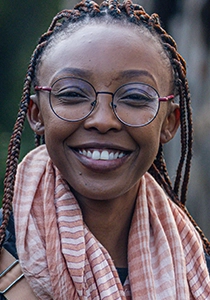
BEA WANGONDU
Kenya
Bea Wangondu is a Kenyan journalist, producer and filmmaker. After years working on international docu- mentary productions, Kikuyu Land marks her feature directorial debut. A deeply personal investigation into colonialism, land and memory, the film premiered in the World Cinema Documentary Competition at the 2026 Sundance Film Festival.